Tempered and heat-strengthened glass are both produced by heating glass and cooling it quickly, but they are not interchangeable. The cooling rate, final strength and break behaviour are different, and those differences decide where each product belongs.
How both processes work
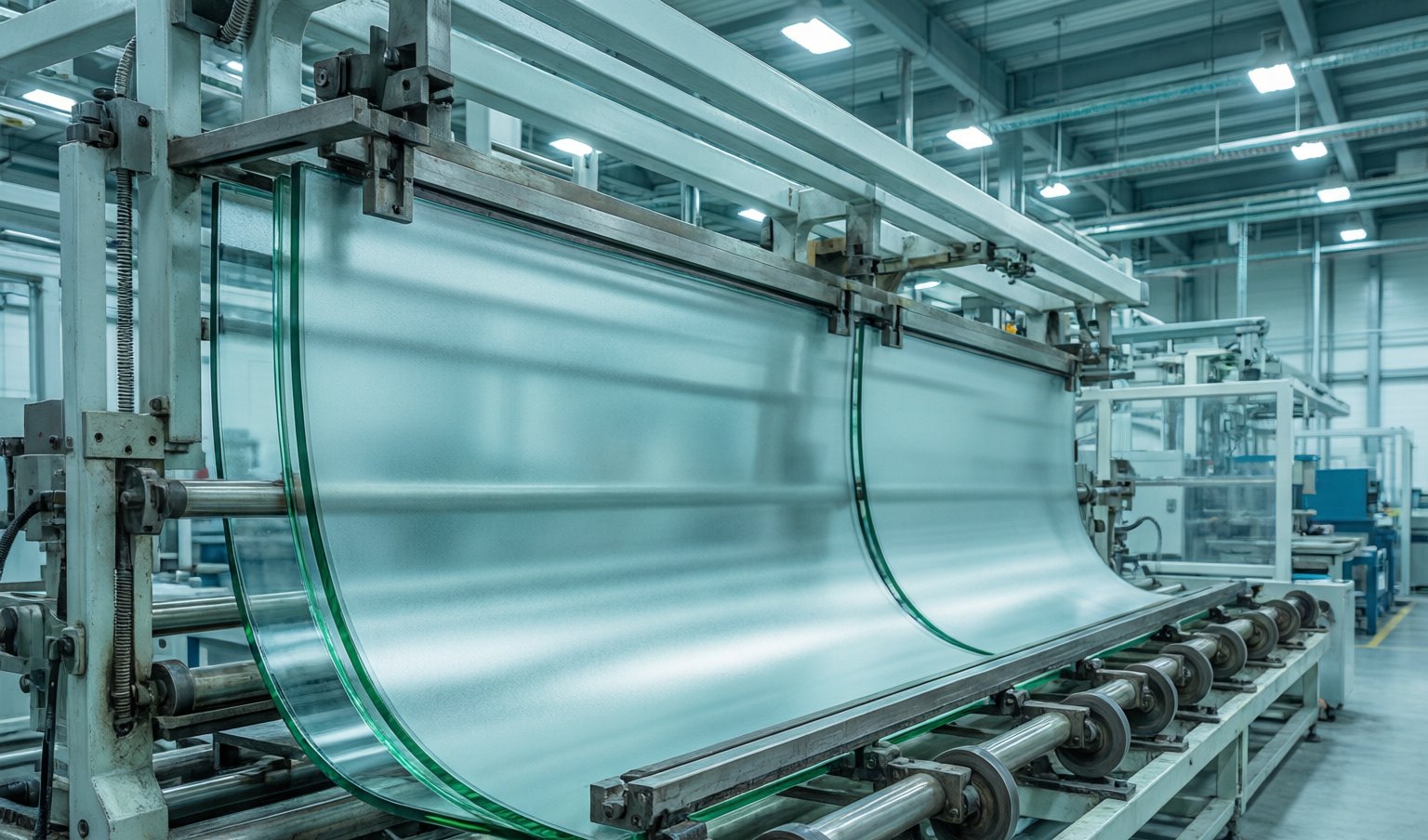
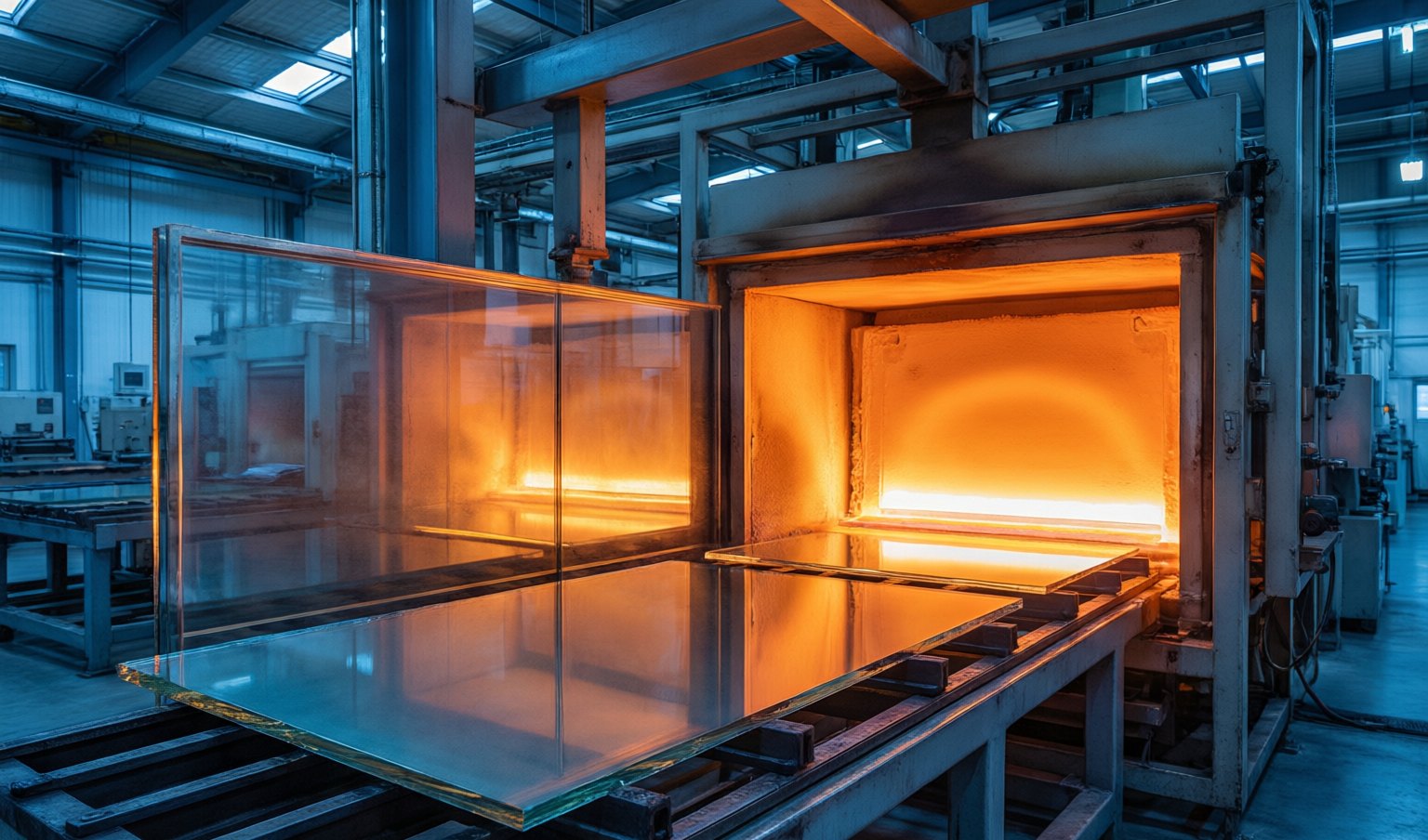
Annealed glass is heated to around 680 °C and then cooled. In tempering, the cooling is fast enough to create a high level of surface compression and a corresponding tension zone in the core. Heat-strengthening uses a slower cooling cycle, producing lower surface compression and roughly twice the strength of annealed glass rather than the four to five times achieved by tempering.
Strength and break behaviour
Tempered glass is stronger and more resistant to thermal stress, but when it breaks it fragments into small, relatively blunt pieces. That break pattern is why tempered glass is used in doors, balustrades, shower enclosures and other safety-critical locations. Heat-strengthened glass is stronger than annealed glass but breaks in larger, sharper pieces that tend to stay in the frame. It is often used where thermal stress resistance is needed but the small-fragment break pattern of tempered glass is not required.
Where tempered glass is the right choice
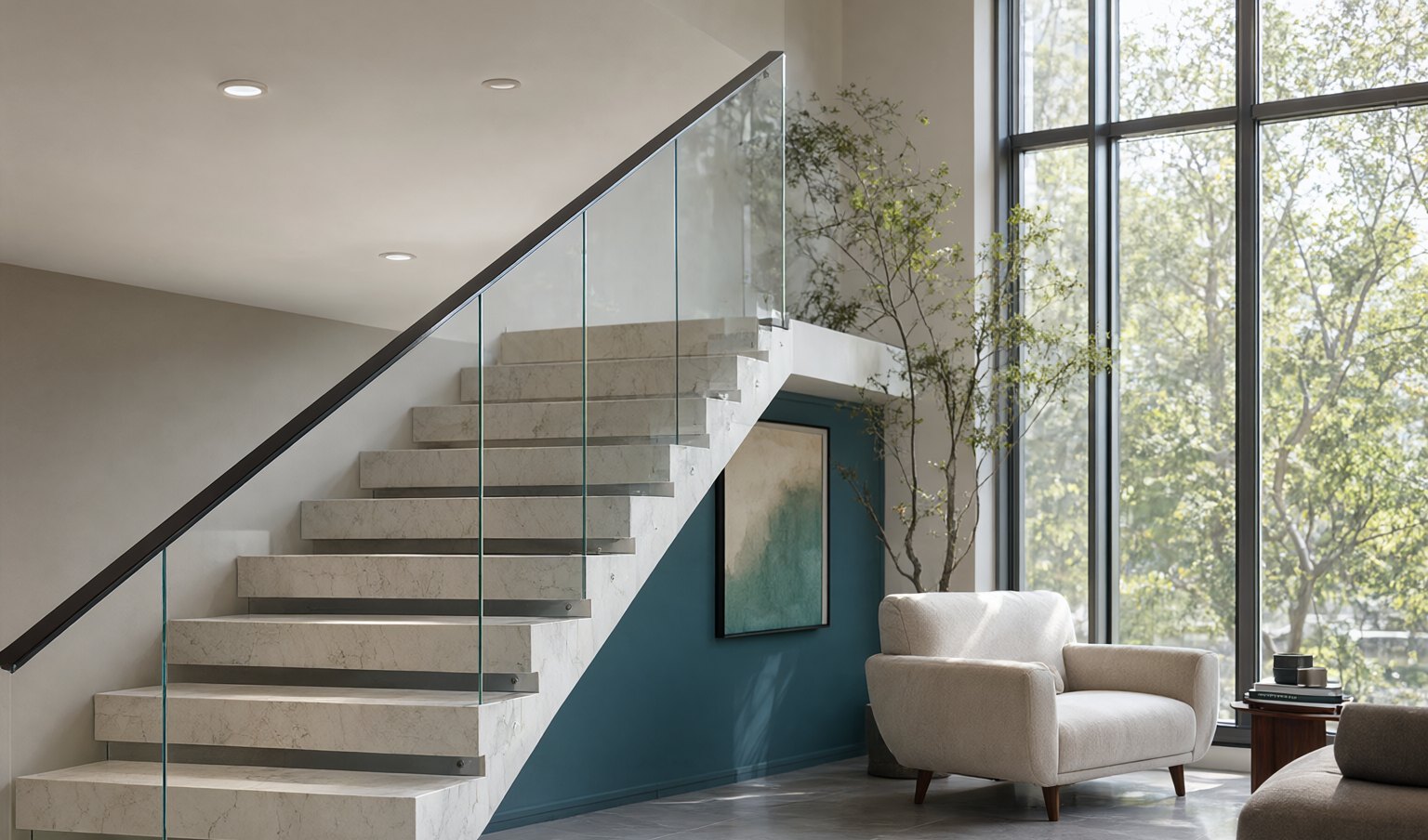
- Balustrades, guards and other locations with a fall risk.
- Frameless or partially framed doors and shopfronts.
- Shower enclosures and bathroom partitions.
- Glass floors, treads and other walk-on applications, usually in a laminated build-up.
- Facade panels where the project standard requires a safety-glass break pattern.
Where heat-strengthened glass fits better
Heat-strengthened glass is often specified for spandrel panels, some facade applications and laminated assemblies where the designer wants the glass to remain in its frame after breakage. It can also be a better match for certain coated or printed products where the optical quality of tempered glass is less predictable. Local codes and project standards should always be checked before selecting it for a safety-critical location.
Heat soak and spontaneous breakage
Tempered glass can contain nickel sulphide inclusions that may expand over time and cause spontaneous breakage. Heat soak testing exposes finished tempered glass to an elevated temperature cycle to screen out panels at risk. It is not a substitute for correct design, but it is a useful additional measure for high-value or hard-to-replace installations.
Fabrication rules
Both products must be cut, drilled, notched and edgeworked before heat treatment. The same rules apply: holes need adequate edge distance, corners need radii and edges should be free from damage. Tempering a panel with a poor edge or a badly placed hole can cause breakage during processing or later in service.
A simple selection checklist
- Does the application require a safety-glass break pattern?
- What wind, barrier or point load must the panel resist?
- Is thermal stress expected from shading, blinds or dark coatings?
- Will the panel be laminated, insulated or used as a single sheet?
- Does the project standard require heat soak treatment?
Casada tempers glass on an in-house line and can supply heat soak treatment where required. Our safety glass is tested against ANSI, BS 6206, EN 12150 and CCC requirements, and our team can review the build-up for the location rather than defaulting to the thickest or strongest option.
Need glass for a project?
Send your drawings and requirements for a practical, project-specific proposal.