A glass order is only as good as the drawings behind it. Once a sheet is cut, tempered or laminated, a dimensional error or a mismatched fitting becomes expensive to correct. That is why every Casada order starts with a structured review before production is scheduled.
Start with the opening, not the glass
Reviewers compare the architectural opening with the finished glass size, including frame rebates, clearances, setting blocks, gaskets and sealant joints. A panel that fits the structural opening can still be too tight once the frame and weather seal are included. Dimensions should carry a clear unit, datum and revision, and the drawing should state whether sizes are nominal or measured on site.
For facade work, the review also checks the installation sequence, lifting access and whether panels will be fixed from inside or outside. A large lite that cannot be handled safely on site is a production problem even when the drawing is dimensionally correct.
Check performance requirements against the build-up
Safety, thermal, solar, acoustic and structural requirements should be written as measurable criteria rather than general descriptions. The review confirms that the proposed glass build-up can meet them and that every layer has a purpose.
- Safety standard and glass type, such as tempered, laminated or a combined build-up.
- Wind load, barrier load or point-load requirements for the intended application.
- U-value, solar heat gain and visible light transmission targets for insulated glass.
- Acoustic rating and the frequency range that matters for the space.
- Heat soak treatment or other additional testing requested for tempered glass.
Heat soak treatment needs to be identified before tempering, because it is a separate thermal cycle. The same applies to coating orientation, low-E surface position and the order of lamination in a multi-layer build-up.
Resolve edgework, holes and cutouts early
Tempered glass cannot be cut or drilled after heat treatment. Hole diameter, edge distance, corner radii and notch geometry must be reviewed before the sheet is processed. Small changes that look harmless on a drawing can create a stress concentration that leads to breakage during tempering or in service.
Edge finish matters for both strength and appearance. Polished edges reduce the risk of handling damage and look cleaner in exposed applications, while arrissed edges are usually sufficient where the glass sits inside a frame. The review confirms which edges are visible, which are covered and where a flat polish or bevel is needed.
Approve colour, coating and pattern on a sample
Glass colour changes with thickness, coating, lighting and the background behind it. A tint that looks neutral in one sample can read green or grey in a thicker build-up. For coated, fritted or painted glass, the approved sample should be viewed in the same light conditions and at a similar viewing distance as the finished installation.
Where several batches are involved, the approval should record the reference sample, surface, colour code and coverage so that later production can be compared against it.
Plan packing and delivery with the same care
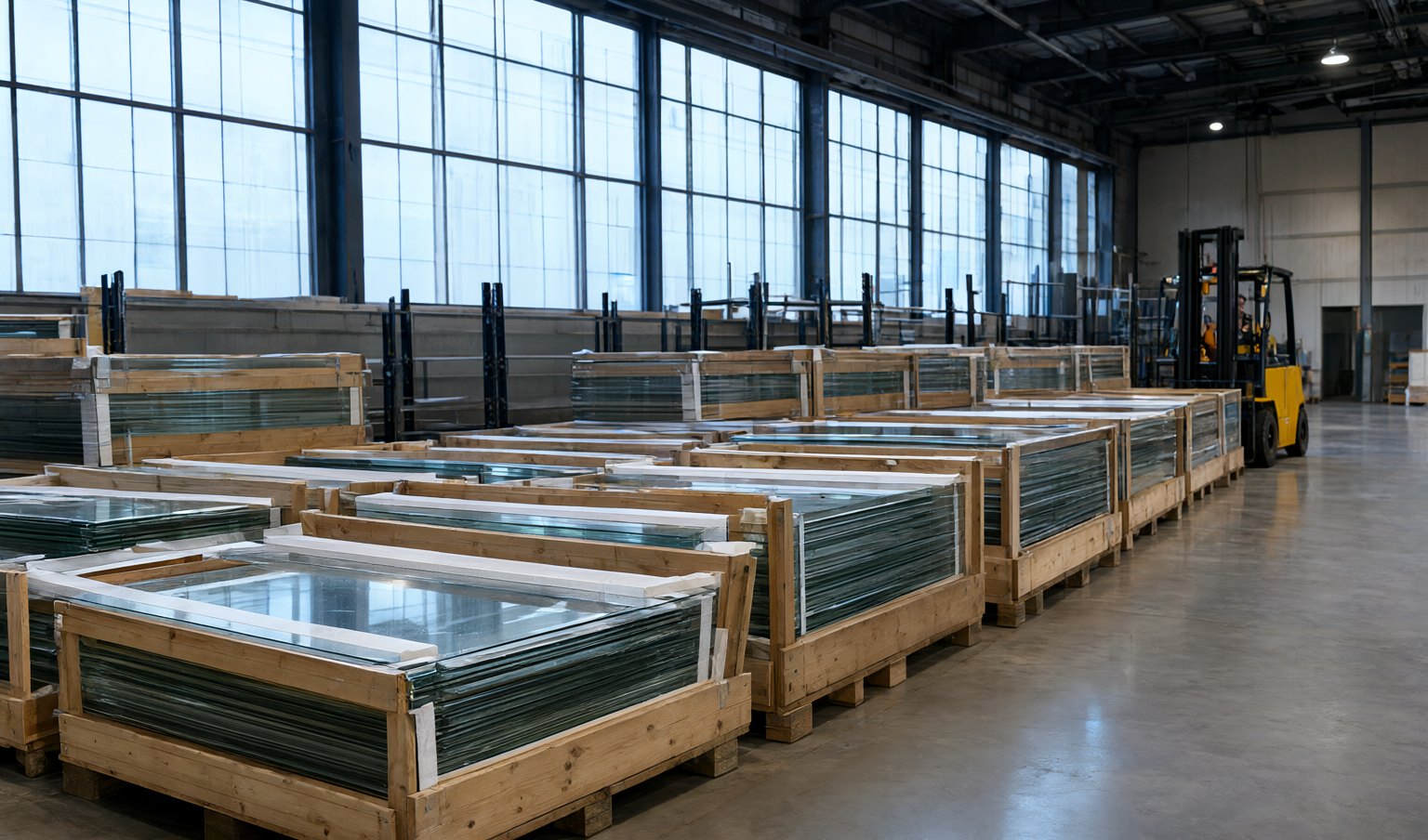
The review also looks at panel weights, crate layout, container loading and site access. Oversized lites may need a custom crate or a different unloading plan. Export orders need enough time for sea-worthy packing, documentation and transport booking, and the site team needs to know how the glass will arrive and how it should be stored.
What to send with an enquiry
A complete enquiry saves a round of questions and shortens the path to a firm proposal:
- The latest architectural or shop drawings in PDF or DWG, including revisions.
- Glass type, thickness, coating and any interlayer requirements.
- Performance criteria and the standards that apply to the project.
- Quantities, sizes and any spares required for breakage or future replacement.
- Destination, required delivery date and site handling constraints.
Casada reviews drawings, performance requirements and packing needs in house, with tempering, laminating, insulating and edging lines under one roof. Our team can flag conflicts before production and propose a build-up that matches the project rather than the nearest catalogue item.
Need glass for a project?
Send your drawings and requirements for a practical, project-specific proposal.