Commercial construction across Southeast Asia is diverse, but many projects share the same glass priorities: control solar heat, manage humidity, resist coastal conditions and keep delivery predictable. These priorities shape the specification before appearance is finalised.
Solar control comes first
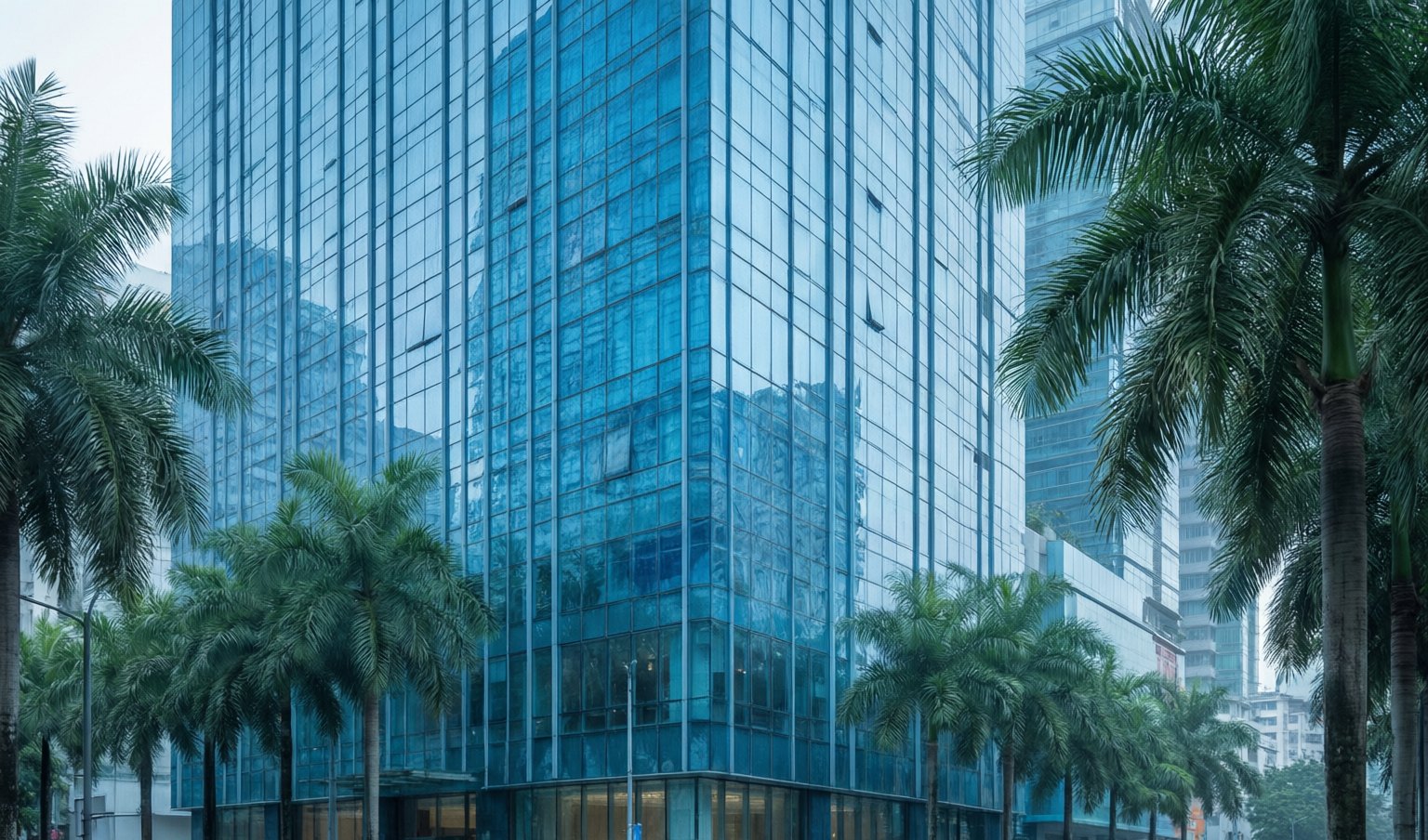
In cooling-dominated climates, solar heat gain has a direct effect on air-conditioning load and occupant comfort. Low-E and solar-control coatings, combined with insulated glass, are common ways to reduce heat while keeping a usable level of daylight. The balance between solar control and visible light transmission should be reviewed for each facade orientation rather than applied as a single specification for the whole building.
Humidity and seal durability
High humidity puts pressure on insulated glass edges. A well-made unit with the right desiccant, primary seal and secondary seal is essential. Warm-edge spacers also reduce the risk of condensation at the edge of the unit, which matters in air-conditioned interiors where the outside air is hot and humid.
Laminated glass used in bathrooms, kitchens or semi-external spaces should be specified with an interlayer that is suitable for the moisture exposure. Edge sealing and installation details should keep water away from exposed laminate edges.
Coastal salt and hardware
Projects near the coast need to consider salt exposure on frames, fittings and accessible glass surfaces. Stainless steel or properly finished hardware, together with a cleaning routine, helps protect the installation. Glass coatings and interlayers should be selected for the environment, not only for the visual effect.
Wind and rain exposure
Many parts of the region experience intense rain and strong wind. Facade glass must be designed for the local wind load, with the correct thickness, support and fixing details. Horizontal or sloping glass, canopies and large openings need particular attention because water and wind pressure act differently from a vertical facade.
Acoustic performance in dense cities
Traffic, construction and urban activity can make acoustic performance a deciding factor in offices, hotels and residential projects. Laminated glass with an acoustic interlayer is often more effective than simply adding thickness, especially when the noise has a low-frequency component. The frame, seals and flanking paths also affect the result.
Standards and documentation
Projects may reference international standards, local codes or both. The glass supplier should be able to provide test reports, certificates and build-up details that match the specified standard. Early clarification avoids a situation where the product is correct but the paperwork is not accepted.
Logistics and packing
Island and coastal destinations often involve several handling steps after the sea leg. Strong crates, clear labels and a packing plan that suits the receiving port are as important as the glass itself. Consolidating sizes and planning replacement panels can reduce risk on projects with long supply chains.
Casada supplies architectural, decorative and furniture glass to international markets from its factory in Guangdong. Our team prepares export documents, packs every order in sea-worthy crates and coordinates delivery with the project schedule, giving buyers a single contact from enquiry to shipment.
Need glass for a project?
Send your drawings and requirements for a practical, project-specific proposal.