Low-E coatings are almost invisible, but the numbers used to describe them decide how comfortable a building feels and how much energy it uses. Three values do most of the work: U-value, solar heat gain coefficient and visible light transmission.
How low-E glass works
A low-emissivity coating is a thin metallic layer that reflects long-wave infrared radiation. In simple terms, it helps keep heat on the side where it is wanted. The coating is applied to one surface of a glass pane, and its position within an insulated unit changes how the assembly performs.
U-value: heat flow through the assembly
U-value measures how quickly heat passes through the glass or window. A lower value means better insulation. For an insulated glass unit, the result depends on the panes, the coating, the gas fill, the spacer and the frame, not only the glass itself. Centre-of-glass values can look much better than whole-window values, so the comparison must use the same basis.
SHGC: solar heat entering the room
The solar heat gain coefficient describes how much solar energy passes through the glass as heat. A lower SHGC reduces cooling demand in sunny climates, but very low values can also reduce daylight and change the appearance of the facade. The right target depends on orientation, climate and how the space is used.
VLT: daylight and glare
Visible light transmission is the share of daylight that passes through. A bright retail space, an office and a bedroom may need very different levels. When comparing products, look at VLT together with SHGC: a glass that blocks heat by becoming very dark may create a gloomy interior and higher lighting loads.
Match the balance to climate and orientation
- Cooling-dominated climates: prioritise a low SHGC while keeping enough daylight for the space. Solar-control Low-E coatings and argon-filled units are common choices.
- Heating-dominated climates: a lower U-value matters more, and a higher solar gain can be useful in winter. Warm-edge spacers and well-sealed units reduce edge losses.
- Mixed climates: the balance changes by orientation. West and south facades often need more solar control than north facades.
- Skylights and atria: glare and overheating are usually the dominant concerns, so the coating and frit strategy should be reviewed together.
Argon, krypton and warm-edge spacers
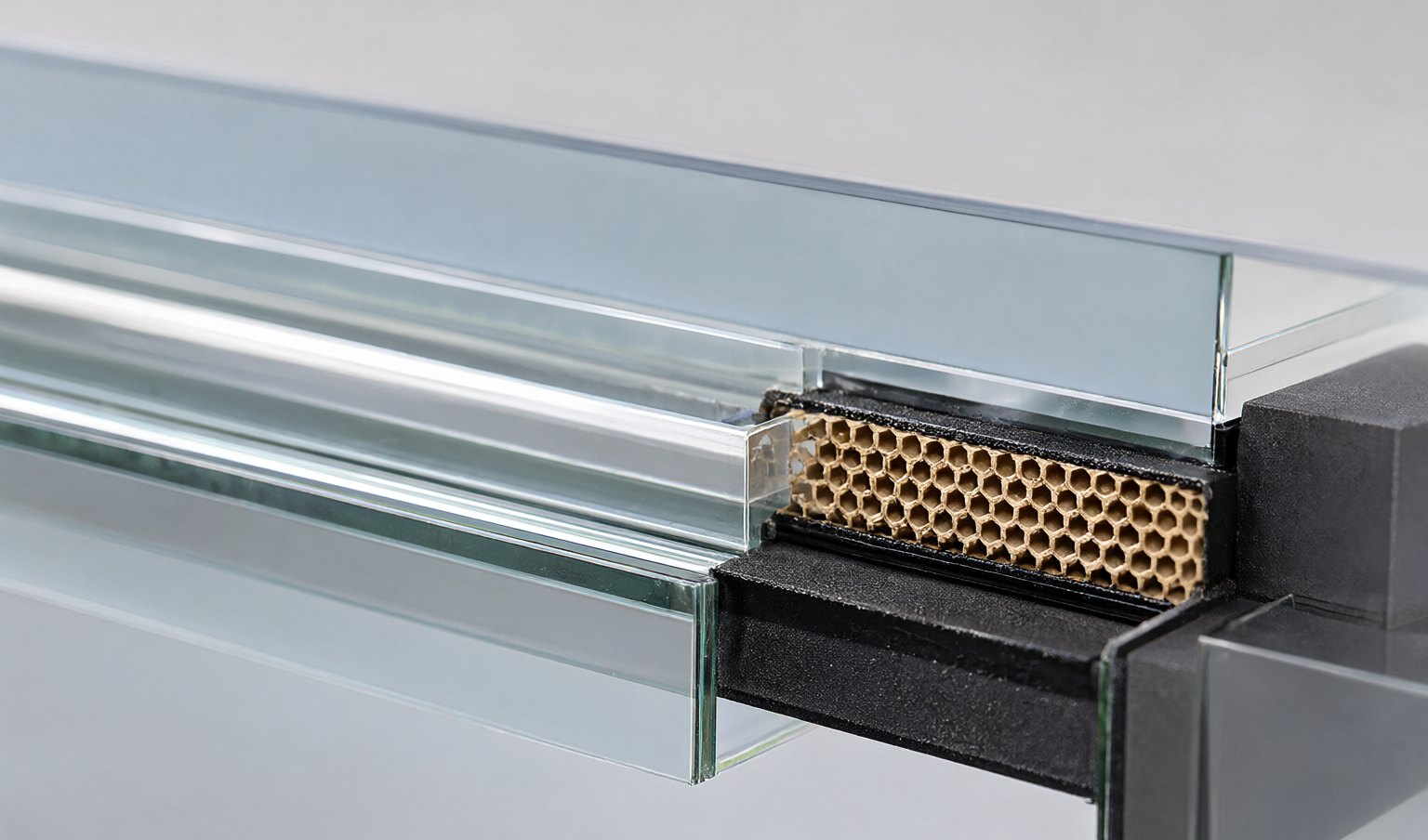
Gas filling slows heat transfer between the panes. Argon is the common choice for most commercial units, while krypton can be useful where the cavity is narrow. The gas only works if the unit is properly sealed, so the spacer and seal system matter as much as the gas itself. Warm-edge spacers reduce thermal bridging at the perimeter and help control condensation on the room-side edge.
Common specification mistakes
- Selecting glass on U-value alone without checking solar gain and daylight.
- Comparing centre-of-glass performance with whole-window performance.
- Ignoring the frame, spacer and installation detail.
- Assuming a coating performs the same way on every surface of the unit.
- Forgetting that altitude, gas fill and unit size can affect performance.
Verify before production
Ask for test reports that match the proposed build-up, confirm the coating surface and review a sample under the project lighting. For large or high-performance units, a mockup and a gas-fill check give the project team confidence before the full order is released.
Casada assembles insulated glass on automatic lines with bent spacers, desiccant, dual seals and optional gas filling. Our team can review the coating, cavity and spacer as a single system and match the unit to the climate and orientation of your project.
Need glass for a project?
Send your drawings and requirements for a practical, project-specific proposal.