An insulated glass unit looks simple from the outside: two or more panes separated by a gap. In practice, the spacer, desiccant, sealants and gas filling work together, and a weakness in any one of them shows up as condensation, gas loss or a shorter service life.
The glass panes
The panes carry the coating and provide the strength of the unit. Thickness, tempering or lamination and the position of the low-E coating all change the performance. In a triple-glazed unit, the coating positions and cavity widths need to be planned together so that the unit meets its targets without becoming unnecessarily heavy.
The spacer
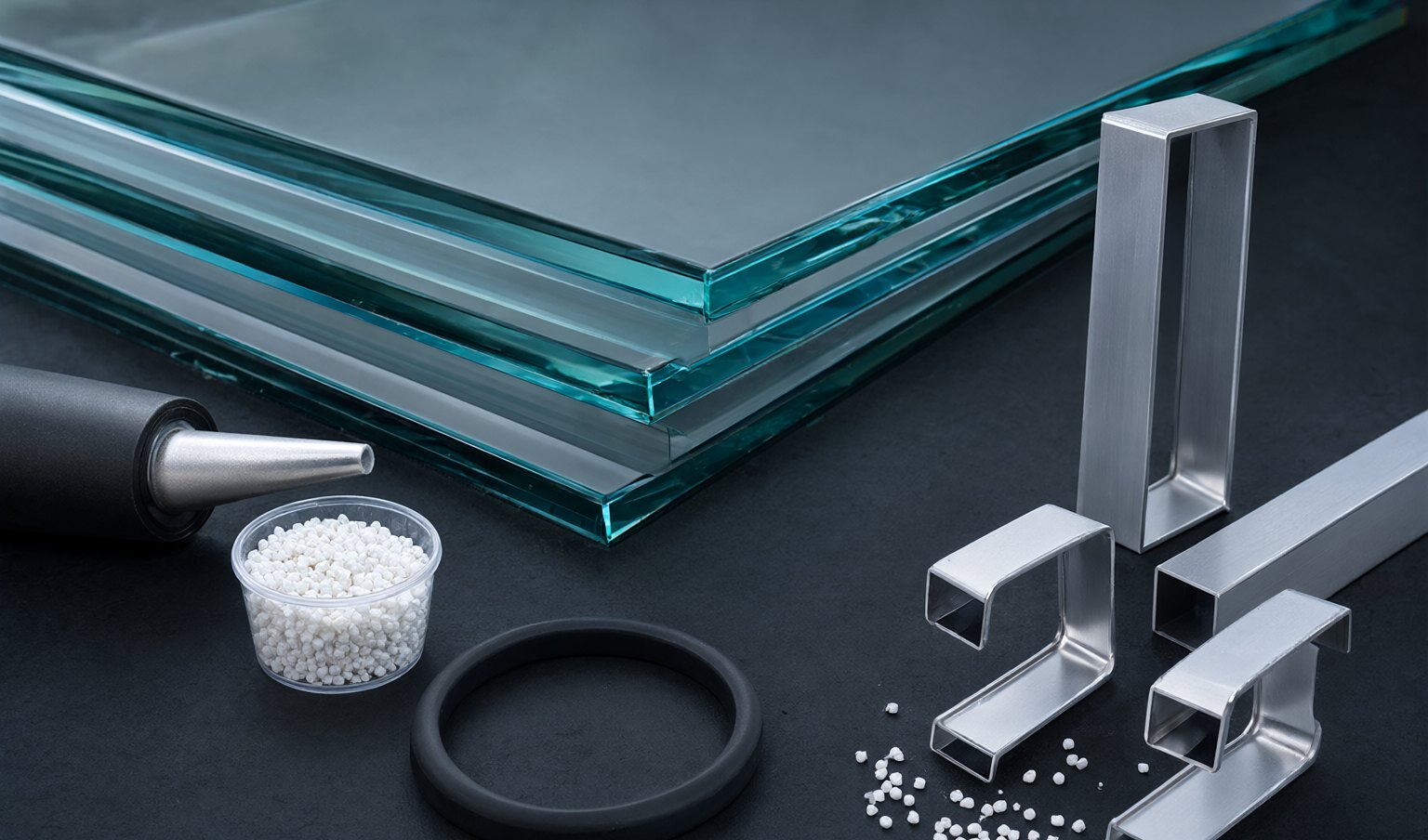
The spacer holds the panes apart and contains the desiccant. Aluminium spacers are strong and familiar, but they conduct heat readily, which can make the edge of the unit colder. Warm-edge spacers use stainless steel, composite or hybrid materials to reduce that thermal bridge. They are now common in projects that want better condensation control and a more comfortable edge temperature.
Spacers can be straight or bent. A bent spacer has fewer corner joints, which reduces the number of potential leak paths and gives a cleaner appearance in exposed units. The choice depends on the unit size, shape and production method.
Desiccant
Desiccant inside the spacer absorbs moisture that enters the cavity during assembly or service. If the desiccant is saturated, moisture can condense on the glass, especially at the edge. The amount and type of desiccant are matched to the cavity volume and the expected service conditions.
Primary and secondary seals
The primary seal, usually butyl, keeps moisture out and gas in at the spacer-to-glass interface. The secondary seal provides structural strength and protects the primary seal. A dual-seal system with properly cured materials is more durable than a single seal, particularly in large units and demanding climates.
Gas filling
Argon is the common fill gas for commercial IGUs. It is denser than air and slows heat transfer through the cavity. Krypton can be used where the cavity is narrow, but it is more expensive and not always necessary. The gas concentration must be checked during production, and the unit must be sealed correctly to keep it there.
What goes wrong
- Moisture or dust trapped inside the unit during assembly.
- Insufficient desiccant or a saturated spacer.
- A poor primary seal that allows gas to escape.
- Spacer corrosion in coastal or polluted environments.
- Handling damage at the edge before the seal has cured.
Quality checks
Production checks should cover unit dimensions, seal adhesion, dew point and gas concentration where gas filling is specified. Visual inspection should confirm that the cavity is clean and the spacer is straight. For large or high-performance units, a sample can be tested before the batch is released.
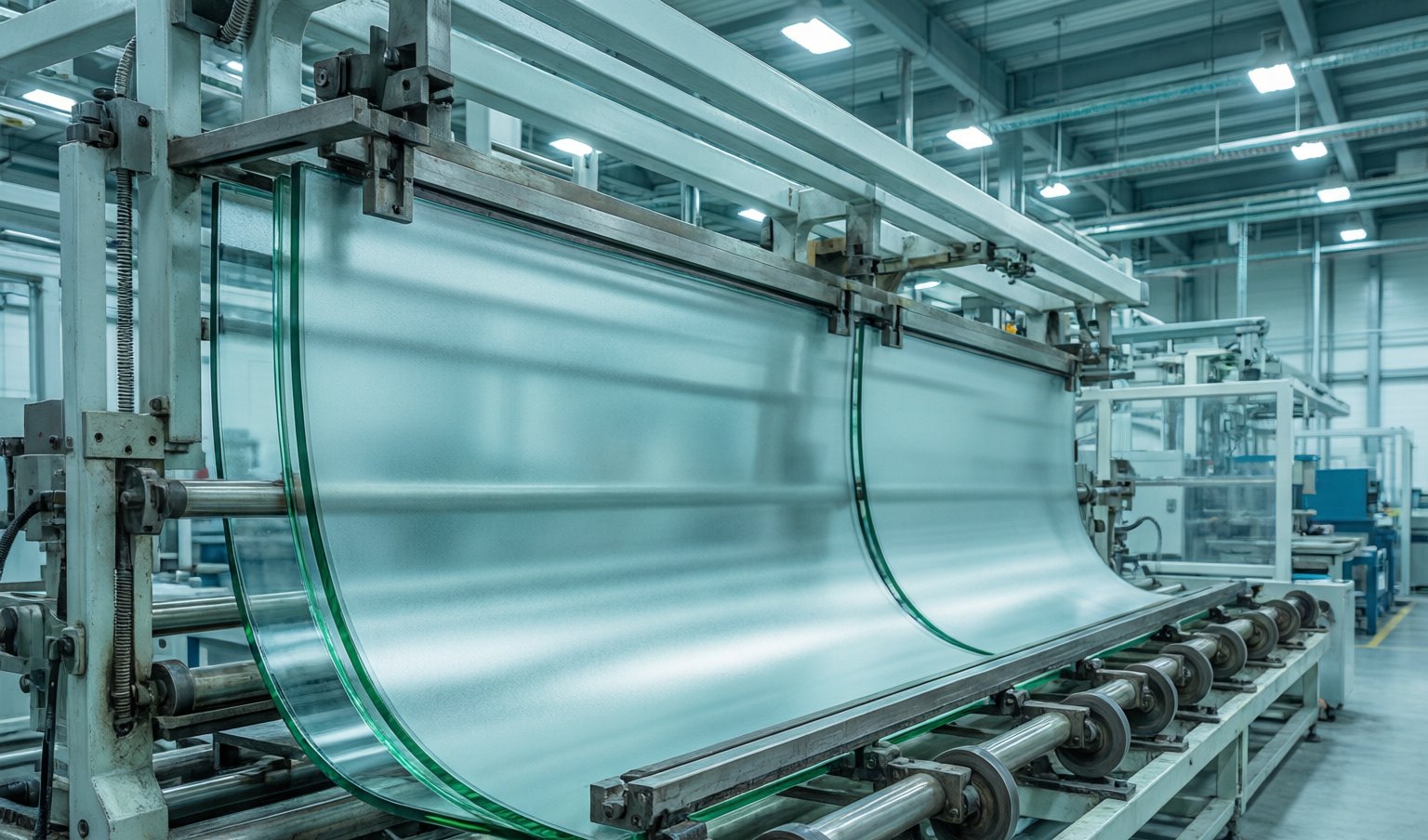
Casada assembles insulated glass on automatic lines with bent spacers, desiccant, dual seals and optional inert gas filling. We review the unit build-up for the project climate and can combine Low-E, laminated and tempered panes in one insulated assembly.
Need glass for a project?
Send your drawings and requirements for a practical, project-specific proposal.