Ceramic frit is a glass enamel applied to the surface and fired during heat treatment. It can be printed as a solid colour, a dot pattern or a gradient, giving designers a way to control solar gain while creating a facade identity. The key is to coordinate the pattern with the glass build-up, the lighting and the production process.
What ceramic frit is
A frit coating is made from glass powder, pigments and a carrier. It is applied by screen printing or another digital process, then fired at high temperature so that it fuses to the glass surface. The result is a durable, ceramic-like finish that becomes part of the glass rather than a film applied afterwards.
Solar control and glare
Frit reflects and absorbs part of the solar radiation, depending on colour and coverage. A dense white frit can reduce solar gain significantly, while a light dot pattern may be used mainly for glare control or visual effect. Because the pattern is not uniform, the performance of the panel is not uniform either. The design team should agree how coverage is measured and how the fritted area contributes to the facade calculation.
Design options
- Solid colours for spandrels, borders and feature panels.
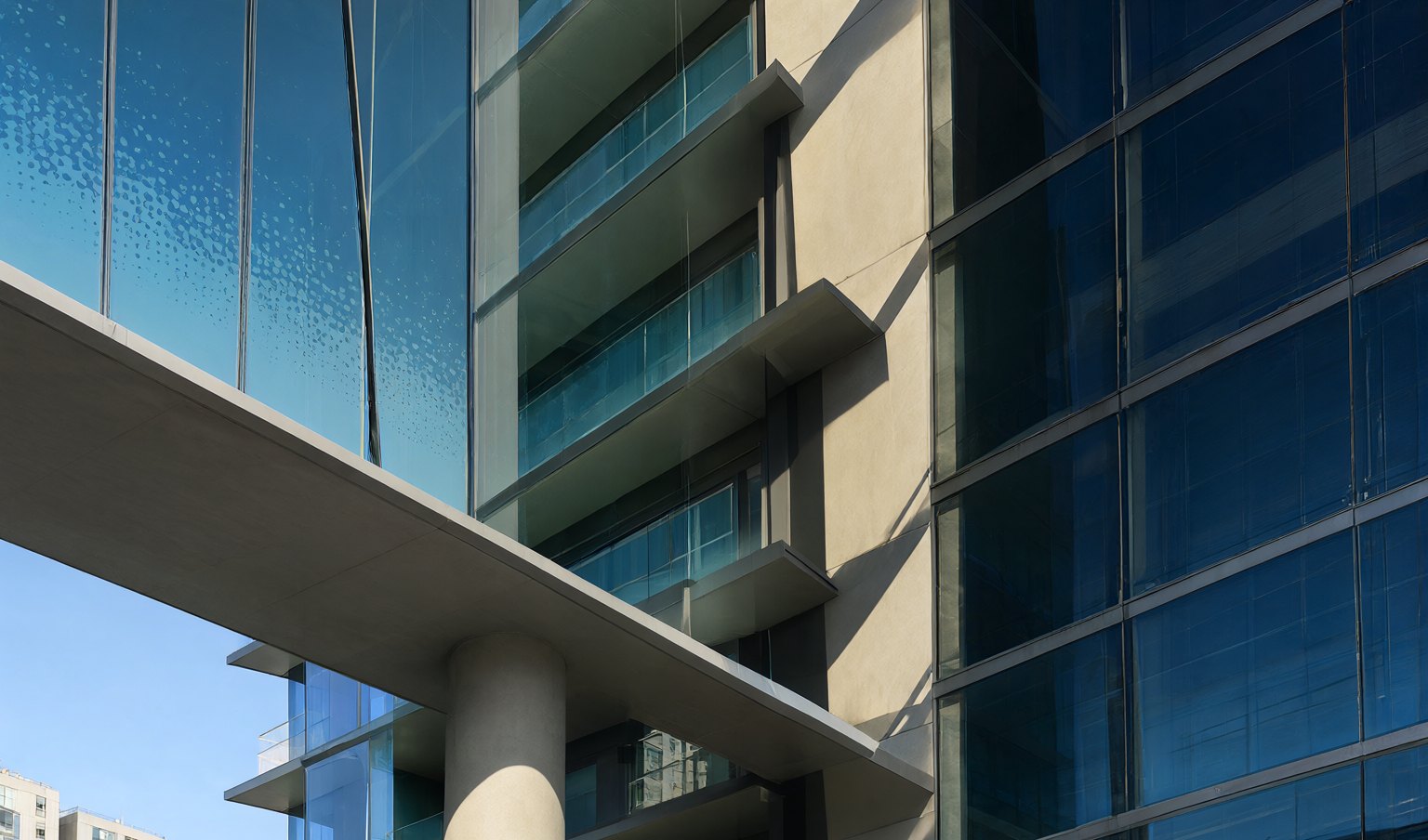
- Dot gradients that fade from opaque to transparent across a facade.
- Stripes and bands that respond to floor levels or solar orientation.
- Custom patterns and images for entrances, canopies and interior features.
Colour and coverage
Frit colour shifts with the glass tint, the lighting and the background behind the panel. A white that looks crisp against a dark interior can look grey against the sky. Coverage also changes the effect: the same pattern can read as a solid band from a distance and as a fine texture up close. A physical mockup viewed at the intended distance is the most reliable approval method.
Durability and fabrication
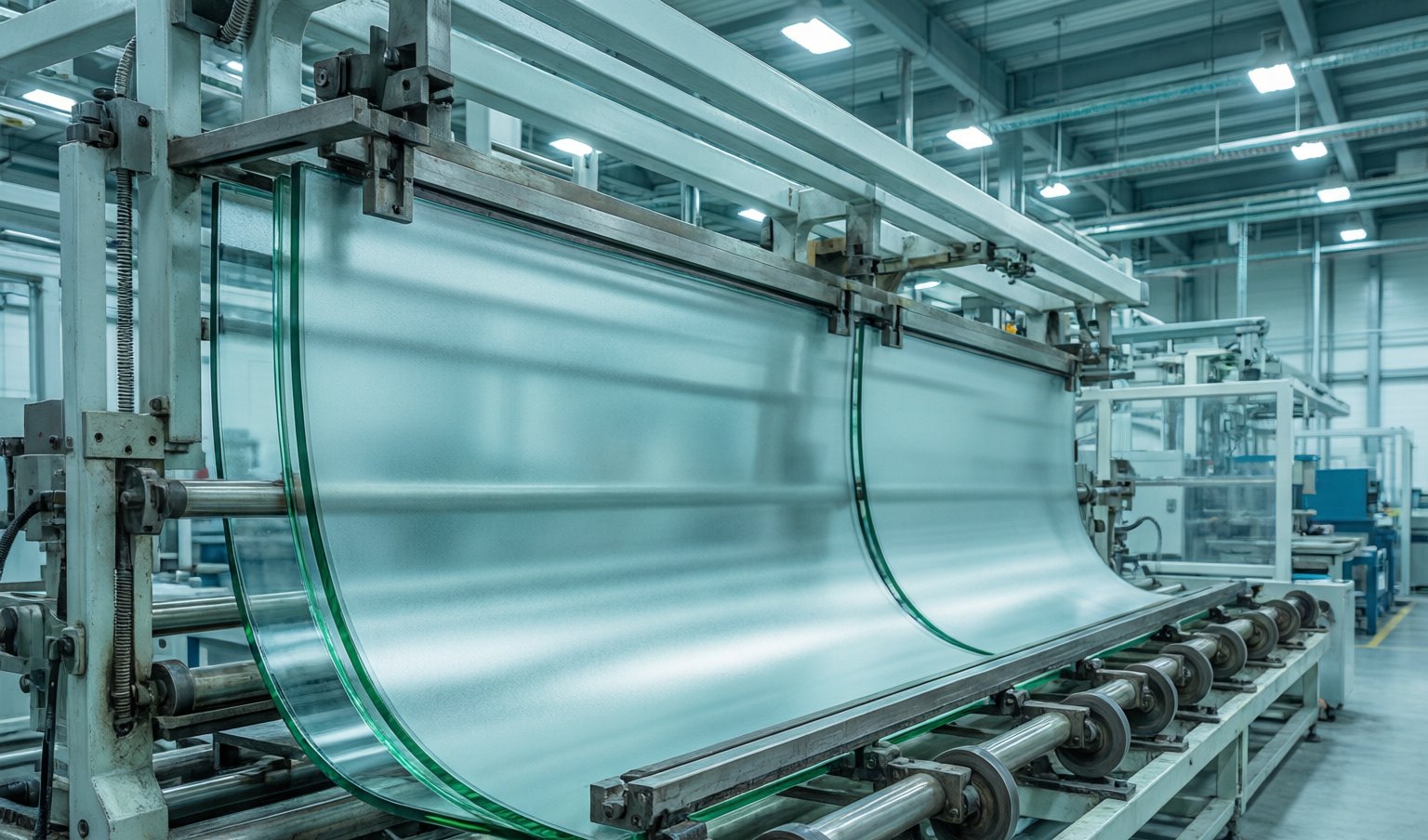
Because the frit is fired into the glass, it is resistant to normal cleaning and weathering. The coating must be applied before tempering or heat strengthening, so the pattern, glass type and heat treatment need to be fixed together. Edges, holes and cutouts should be completed before printing where possible, and the frit should be kept away from areas that will be assembled into a seal or fitting.
Mockups and approval
Approve the pattern, colour, coverage and glass build-up as a set. The mockup should use the same glass, frit and heat treatment as the production panels and should be viewed in daylight and at night if the facade will be lit. Record the approved sample so that later batches can be compared against it.
Common coordination issues
- Pattern scale that looks right on a drawing but too fine or too coarse on the facade.
- Frit colour that changes when the glass is laminated or insulated.
- Coverage percentages that are calculated differently by different suppliers.
- Frit extending into a seal or edge zone where it interferes with adhesion.
- Insufficient time for printing, firing and mockup approval.
Casada produces custom art painted and decorative glass to order, including patterns, colours and gradients matched to project samples. Our team reviews the pattern, glass type and heat treatment together so that the finished panel matches the approved design.
Need glass for a project?
Send your drawings and requirements for a practical, project-specific proposal.